OneCasino account verification, limits and identity checks
 Available in GB
OneCasino uses a risk-based account-verification process that can be triggered at registration, when money is deposited or when a withdrawal is requested. The checks can cover identity, address, the payment instrument and the source of funds or wealth. That makes account setup more than a one-time sign-up task: details entered at the start need to stay consistent with the documents and payment accounts used later.
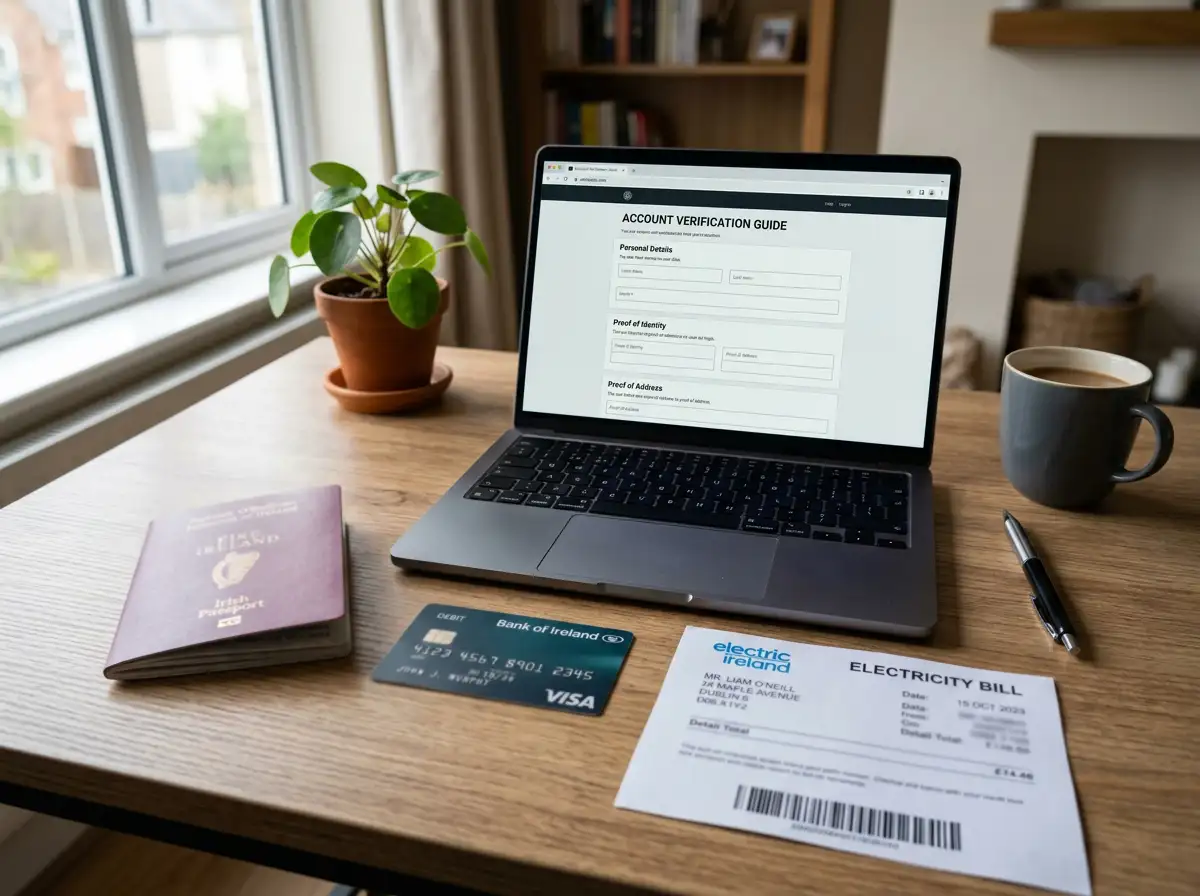
Table of Contents
- Document checks can reach beyond photo ID
- Suspension and closure powers are broad when account risk is suspected
- Verification can occur at several points in the account lifecycle
- Deposit limits operate across three time windows
- Money, loss and time controls cover different risks
- Withdrawal ownership rules connect KYC directly to payments
- Questions about OneCasino account verification
- OneCasino account controls work best when identity and payment details stay aligned
Document checks can reach beyond photo ID
OneCasino’s terms list several types of material that can be requested during verification. Examples include a passport or national identity card, a utility bill for proof of address and copies or evidence connected with a credit or debit card. The terms also allow source-of-funds and source-of-wealth checks where the risk assessment calls for them.
These categories solve different questions. Photo ID connects the account to a person. Address evidence supports the residential details on the account. Payment evidence links the transaction method to the same account holder. Source-of-funds or source-of-wealth material goes further by asking where the money used for gambling originates.
- Identity: passport or national ID can establish the name and date of birth attached to the account.
- Address: a household document such as a utility bill can support the residential address.
- Payment ownership: card or bank evidence can connect deposits and withdrawals to the registered player.
- Funds checks: source-of-funds or source-of-wealth documents can be requested when account activity requires a deeper review.
An Irish Trustpilot reviewer described being asked for a passport and bank statement before withdrawal. That individual experience does not define the process for every account, but it illustrates how the operator’s risk-based policy can move from basic identity proof to financial documentation when a withdrawal is under review.
The practical benefit of keeping account details consistent is straightforward: a name, address or payment method that does not match the supporting evidence creates another issue to resolve before the account can move through the relevant check.
Suspension and closure powers are broad when account risk is suspected
OneCasino’s terms reserve powers to suspend or close accounts where the operator suspects fraud, regulatory risk, use of prohibited tools or problems involving third-party payments. Those clauses matter because an account review can affect access before a final decision about the underlying issue is made.
The same terms distinguish that situation from an ordinary requested closure. When a player asks to close an account, remaining money is described as transferable after the necessary review. A risk-triggered suspension is therefore a different path from simply choosing to stop using the account.
- A routine closure starts with the player’s request to end the account relationship.
- A risk review starts with activity that the operator considers potentially problematic under its terms.
- Payment ownership, document checks or prohibited-account activity can become part of that review.
- Funds can remain subject to review while the account issue is resolved.
This makes record keeping useful even outside formal KYC. Keeping copies of deposit confirmations, withdrawal requests and messages about account changes creates a clear timeline if support later asks how a transaction or identity detail was handled.
Verification can occur at several points in the account lifecycle
OneCasino can carry out checks at registration, deposit or withdrawal. The timing is risk-based rather than tied to a single universal checkpoint, so two players can encounter verification at different stages even when they are using the same casino.
| Account stage | What can be checked | Practical consequence |
|---|---|---|
| Registration | Identity and age details | The personal data entered at sign-up needs to match later evidence. |
| Deposit | Payment ownership and transaction details | A payment method in another person’s name can create an account issue. |
| Withdrawal | Identity, address, payment instrument and deeper funds checks where required | A cash-out can remain under review until the requested evidence is accepted. |
OneCasino requires players to be at least 18, or older where local law sets a higher age. Ireland’s legal gambling age for this context is 18, so the operator’s baseline age rule aligns with the Irish threshold used across this site.
A useful preparation sequence is simple: keep the registered name identical to the name on the payment account, keep address details current, and use readable documents that show the information being requested. That does not guarantee a particular review time, but it reduces avoidable mismatches between the account record and the evidence supplied.
Deposit limits operate across three time windows
OneCasino provides deposit limits for 24-hour, 7-day and 30-day periods. These windows let a player set a ceiling around incoming gambling spend over a day, a week and a longer monthly-style period rather than relying only on a single session decision.
The operator also applies a seven-day delay before an increase to a deposit limit takes effect. That delay changes the function of the control: lowering a limit can support an immediate decision to reduce exposure, while increasing it is separated from the moment in which the player asks for more room to deposit.
- A 24-hour limit is useful for controlling short bursts of spending.
- A 7-day limit gives a broader view when play is spread across several sessions.
- A 30-day limit can anchor gambling spend to a longer personal budget cycle.
- The seven-day delay on increases introduces time between the decision to raise a limit and the change taking effect.
Deposit limits apply to money entering the account, so they should be read alongside the separate wagering, loss and session controls. A player can stay within a deposit ceiling and still gamble for longer than intended if there is no separate time boundary or loss limit.
Money, loss and time controls cover different risks
OneCasino lists deposit, wagering, loss and session-time limits, plus self-exclusion. Each control addresses a different part of gambling behaviour. Deposit limits control how much money can be added. Wagering limits address turnover. Loss limits focus on net money lost, while session-time limits put a boundary around duration.
Using more than one type can create a stronger personal boundary because gambling harm is not only about deposits. Repeated recycling of a balance can produce high wagering volume without another deposit, and long sessions can continue even when individual stakes are small.
- Set a money boundary before play rather than after a losing run begins.
- Use a time limit when session length is a concern, because a deposit limit alone does not control duration.
- Use self-exclusion when a complete break is needed rather than trying to manage exposure with higher numerical limits.
Gambling can cause financial harm. If controlling time or spending is becoming difficult, stop gambling and use a support service such as Extern Problem Gambling at problemgambling.ie.
The useful distinction is between a control and a target. A limit is a maximum boundary, not an amount that needs to be reached. Setting a €100 ceiling, for example, does not make €100 an expected or sensible spend.
Withdrawal ownership rules connect KYC directly to payments
OneCasino requires withdrawals to be made in the registered account holder’s name. Its payment terms also say that third-party deposits can lead to refusal or blocking. That links account identity directly to the cash-out process: the casino is not treating KYC as a separate paperwork exercise once a payment request begins.
Where the deposit method connected with the winning funds can receive refunds, withdrawals are sent back through that route; otherwise the operator can use a bank account. The payments guide covers that routing in detail, including the same-method rule and the separate €0.01 first-withdrawal verification deposit used to verify a bank or payment account.
- Keep the player account and payment account under the same name.
- Avoid third-party cards or bank accounts because ownership mismatches can block a transaction.
- Expect identity and payment checks to interact when a withdrawal is requested.
- If a bonus is active, review the bonus terms as well because incomplete wagering can separately affect bonus-derived funds.
This is the point where account management and payment management become the same practical task. Accurate personal details, payment ownership and the transaction trail all need to point to the same person.
Questions about OneCasino account verification
When can OneCasino ask for identity checks?
OneCasino uses risk-based verification and can carry out checks at registration, deposit or withdrawal.
Which documents can OneCasino request?
Examples in the terms include a passport or national ID, proof of address such as a utility bill, payment-card evidence and, where relevant, source-of-funds or source-of-wealth documents.
What deposit limits are available at OneCasino?
OneCasino provides 24-hour, 7-day and 30-day deposit limits. An increase takes effect after a seven-day waiting period.
Can another person’s payment method be used for a OneCasino account?
OneCasino requires withdrawals to be made in the registered account holder’s name and can refuse or block transactions involving third-party payment methods.
What safer-gambling controls does OneCasino provide?
The account controls include deposit, wagering, loss and session-time limits, together with self-exclusion.
OneCasino account controls work best when identity and payment details stay aligned
The account framework joins several moving parts: risk-based verification can appear at registration, deposit or withdrawal; document requests can extend from photo ID to payment and funds evidence; deposits can be limited over 24-hour, 7-day and 30-day periods; and separate wagering, loss, session and self-exclusion controls address different forms of exposure. The clearest practical rule is to keep the registered identity, address and payment ownership consistent from the first transaction onward, while treating safer-gambling limits as boundaries rather than spending targets.
Read next
Written by the editors at OneCasino.